
Summary
Spider veins and varicose veins are both caused by circulation problems that occur when the valves in the veins stop working efficiently. Although they share similar causes, they differ in size, depth and symptoms. Spider veins are usually smaller and cosmetic, while varicose veins are larger and may cause pain or swelling. A vein specialist can evaluate your symptoms and recommend non-surgical treatment options. If you’re interested in learning more about vein conditions, you can also read our guide Everything You Need to Know About Vein Health.
Spider veins and varicose veins are both common issues that affect people from all walks of life. Our circulatory system is designed so that veins carry deoxygenated blood back to the heart. For a part of that journey, the circulatory system is fighting against gravity. There are valves in the veins that stop blood flowing backward. If those valves don’t work efficiently, blood can pool in superficial veins close to the skin. At our vein treatment clinic we can diagnose those veins, and suggest treatments depending on their type and severity.
Vein conditions are extremely common, especially as people age. Long periods of sitting or standing, genetic factors and hormonal changes can all affect circulation and vein health. Many patients initially notice small changes in the appearance of veins before experiencing any physical symptoms. This is why routine evaluation by a vein specialist can be helpful when visible veins begin to appear.
Maintaining healthy circulation is an important part of overall vascular health. When blood is able to flow efficiently back toward the heart, the body is better able to deliver oxygen and nutrients throughout the tissues. When circulation slows or blood pools in certain veins, it can lead to the visible vein patterns many people recognize as spider veins or varicose veins.
Are varicose and spider veins the same?
Spider veins and varicose veins are caused by similar issues with the valves in the veins. It’s easy to confuse the two based on appearance alone, but they’re not the same. Here, we’ll explore the main differences, and how these conditions can be treated.
Although both conditions involve weakened vein valves, the symptoms and severity can vary widely from one patient to another. Some people may only experience cosmetic concerns, while others develop discomfort or circulation issues that affect daily activities.
Spider veins vs. varicose veins – what’s the difference?
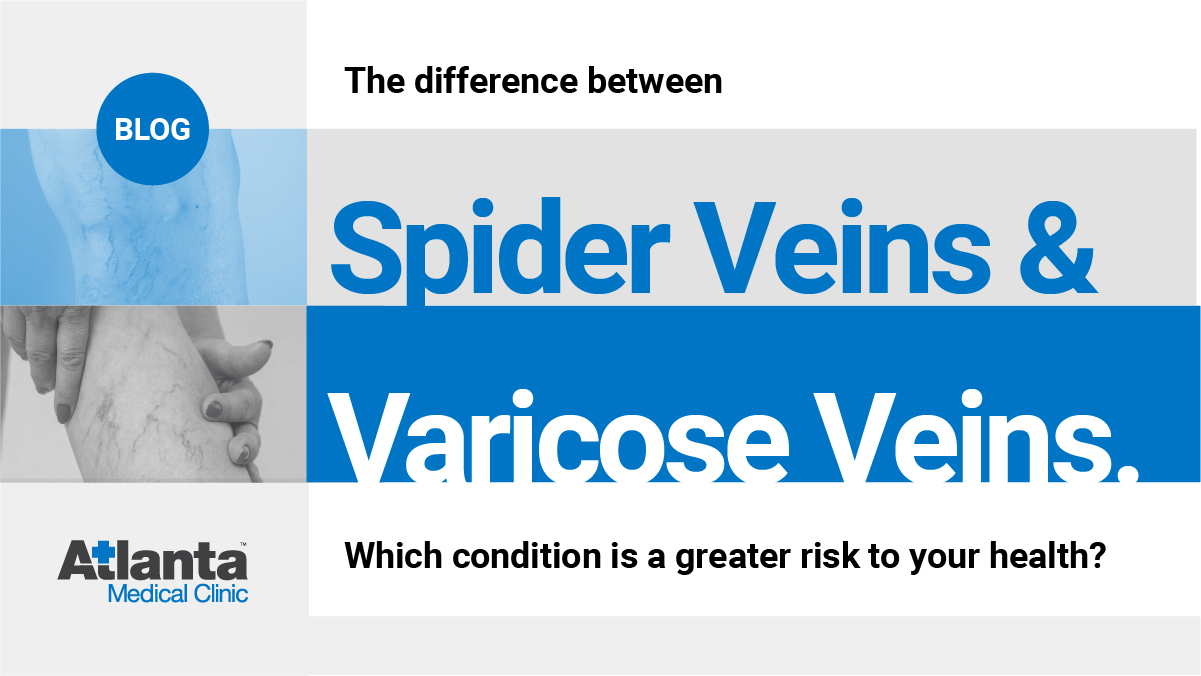
Spider veins are typically smaller than varicose veins, and tend to be very close to the skin. Varicose veins are usually larger, and run deeper. In addition, spider veins can affect the legs or face. Varicose veins are limited to the legs. Spider veins aren’t painful, but varicose veins can lead to swelling, cramps and pain.
Key Differences Between Spider Veins and Varicose Veins
- Size and depth. Spider veins are small surface vessels, while varicose veins are larger and deeper beneath the skin.
- Appearance. Spider veins often look like thin red or blue lines, while varicose veins appear twisted or bulging.
- Symptoms. Spider veins are typically cosmetic, while varicose veins can cause aching, swelling or heaviness in the legs.
- Location. Spider veins may appear on the legs or face, while varicose veins usually develop in the legs.
- Potential complications. Varicose veins may lead to circulation problems if left untreated.
Do spider veins become varicose veins?
Spider veins don’t cause varicose veins, or get worse to become varicose. However, the opposite can happen, with varicose veins causing swelling that leads to the appearance of spider veins. Untreated varicose veins can also lead to other complications, such as blood clots, wounds that take a long time to heal, and ruptured veins.
Do I have spider veins or varicose veins?
If you have visible or swollen veins on your face or legs, it’s worth having a professional at a vein treatment clinic evaluate them. They’ll be able to diagnose the cause of the swelling and visible veins, and recommend the most suitable treatment options.
For some patients, spider veins are simply a cosmetic concern. For others, they may represent early changes in circulation that should be evaluated. A vein specialist can help determine whether visible veins are connected to deeper circulation problems or are limited to the surface vessels.
Early evaluation can also help prevent potential complications associated with more advanced vein disease. Addressing circulation issues early may reduce discomfort and help patients maintain healthy veins long term.
Signs That It May Be Time to See a Vein Specialist
- Visible veins that continue to spread or darken over time
- Leg swelling, heaviness or aching after long periods of standing
- Skin irritation, itching or burning around visible veins
- Nighttime leg cramps or restless legs
- Changes in skin color near the ankles or lower legs
These symptoms may indicate underlying circulation issues that should be evaluated by a medical professional.
How to get rid of varicose and spider veins?
The best treatment for varicose and spider veins depends on the location of the veins, and their severity. At Atlanta Medical Clinic we use non-surgical spider vein treatment options that reduce the appearance of those veins, and in the case of varicose veins can close off the vein, preventing potential future complications such as wounds, ruptured veins or blood clots.
Our vein treatment clinic uses minimally invasive treatments that can offer rapid and lasting results, helping you feel more confident in your appearance and your health.
Modern vein treatments often involve technologies that target damaged veins while leaving surrounding tissue unharmed. These procedures typically require little downtime, allowing many patients to return to normal activities quickly.
Patients often find that addressing vein concerns improves both comfort and confidence. In addition to reducing visible veins, treatment can also help relieve symptoms such as aching, swelling or heaviness in the legs.
FAQs
What causes spider veins and varicose veins?
Both conditions are typically caused by weakened vein valves that allow blood to pool in the veins instead of flowing back to the heart efficiently.
Are spider veins dangerous?
Spider veins are usually harmless and primarily a cosmetic concern, although some people may experience mild itching or burning.
Are varicose veins a medical problem?
Varicose veins can sometimes lead to discomfort, swelling or circulation issues, so it is important to have them evaluated by a vein specialist.
Can exercise help prevent vein problems?
Regular physical activity helps improve circulation and may reduce the risk of developing spider veins or varicose veins.
What treatments are available for vein conditions?
Treatment options may include minimally invasive procedures designed to close damaged veins and redirect blood flow to healthier vessels.
When should I see a vein specialist?
If you notice persistent swelling, pain, visible veins or changes in skin color around your legs, it may be time to schedule an evaluation.
Book a Consultation
If you’d like to know more about our vein treatment clinic and how we can help you with your spider or varicose veins, give us a call today to request a consultation.


0 Comments