
Summary
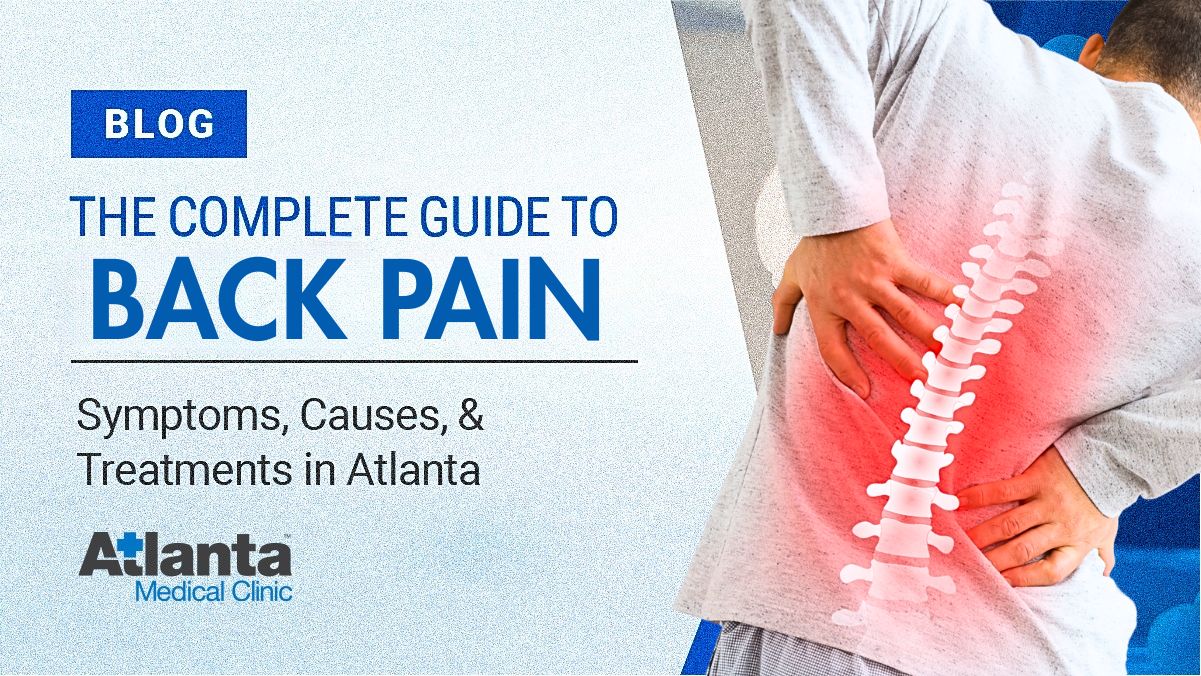
Back pain affects millions of people every year, but the causes and symptoms can vary widely. Some people experience occasional stiffness after physical activity, while others deal with chronic pain. At Atlanta Medical Clinic (AMC), we offer non-surgical back pain treatment in Atlanta designed to address the underlying source of discomfort. Learn more about back pain and available treatments with our comprehensive guide.
Understanding Back Pain
The spine is a complex structure made up of vertebrae, discs, muscles, ligaments, joints and nerves that work together to support movement and stability. If just one part of that system becomes injured, pain can develop in the back and spread into other parts of the body.
Common Causes
Several conditions and lifestyle factors can contribute to back pain, including:
- Herniated or bulging discs
- Nerve compression
- Muscle strains and ligament injuries
- Degenerative disc disease
- Poor posture and prolonged sitting
- Arthritis and joint inflammation
- Sports injuries
- Repetitive lifting
- Auto accident injuries
- Obesity and excess pressure on the spine
Acute vs. Chronic Back Pain
There are two main types of back pain: acute and chronic. Acute back pain typically develops suddenly and lasts for a relatively short period of time. It may occur after lifting something heavy, twisting awkwardly or experiencing a sports or auto accident injury.
Chronic back pain lasts longer and may continue for months or even years without proper treatment. Chronic pain is often associated with ongoing inflammation, degenerative disc disease, spinal instability or nerve compression.
Types of Back Pain
Different types of back pain can produce different symptoms depending on which structures in the spine are affected.
Lower Back Pain
The lumbar spine supports much of the body’s weight and absorbs stress during movement, making it particularly vulnerable to injury and degeneration. Pain in this region may feel sharp, dull, stiff or throbbing. Some people experience pain only in the lower back, while others notice symptoms that travel into the hips, buttocks or legs.
Upper and Mid-Back Pain
Upper and mid-back pain often develops from poor posture, muscle tension, repetitive movement or spinal joint irritation. Long hours sitting at a desk or looking down at devices can place excess strain on the muscles and joints of the upper spine. Patients may experience stiffness between the shoulder blades, limited range of motion or muscle tightness that worsens throughout the day.
Referred Pain
Not all back pain stays confined to the spine. In some cases, irritation or compression affecting spinal nerves can cause pain to radiate into other parts of the body (known as referred pain). For example, nerve compression in the lower spine may create symptoms in the hips, buttocks, legs or feet. Because symptoms may appear far from the actual source of the problem, this pain can be difficult to diagnose.
What Is Sciatica?
Sciatica is a specific type of nerve pain caused by irritation or compression of the sciatic nerve, which runs from the lower spine through the hips and down each leg. Unlike general back pain that may remain localized, sciatica often produces radiating symptoms that travel into the lower body. People with sciatica commonly experience:
- Burning or shooting pain
- Tingling or pins-and-needles sensations
- Numbness
- Muscle weakness
- Pain that worsens while sitting
- Discomfort radiating into one leg
Common Causes
Common triggers and causes of sciatica include:
- Herniated or bulging discs
- Spinal misalignment
- Degenerative disc disease
- Inflammation around spinal nerves
- Spinal stenosis
- Prolonged sitting
- Repetitive stress injuries
A sedentary lifestyle, poor posture and older age are all common risk factors. Having a physically demanding occupation can also increase your risk.
Can Sciatica Go Away on Its Own?
Mild sciatica symptoms can improve with rest and conservative care. However, persistent or worsening nerve pain may indicate an underlying spinal problem that requires professional sciatica pain treatment.
Lifestyle Tips to Support Back Pain Recovery
If you’re wondering how to prevent back pain, healthy lifestyle habits can help. Here are some top tips:
- Maintain proper posture
- Avoid sitting for long periods without movement
- Use supportive office chairs
- Lift heavy objects with the legs
- Stretch regularly and stay physically active
- Sleep on a supportive mattress
- Maintain a healthy body weight to reduce spinal stress
When to See a Back Doctor in Atlanta
While mild cases of back pain can improve with rest and self-care, persistent or severe symptoms may require professional care. You should consider seeing a back doctor in Atlanta if you experience:
- Pain lasting several weeks or longer
- Radiating pain into the legs
- Numbness or tingling
- Difficulty standing or walking
- Symptoms following an accident or injury
- Worsening mobility limitations
Early treatment can help prevent chronic pain and reduce the risk of long-term spinal complications.
How Is Back Pain Diagnosed?
Accurate diagnosis is one of the most important parts of developing an effective treatment plan. During a patient’s first appointment, AMC may perform:
- Medical history evaluations
- Physical examinations
- Neurological evaluations
- Range-of-motion testing
- Diagnostic imaging such as X-rays or MRI review
These assessments help identify root causes, allowing us to develop targeted treatment plans.
Back Pain Treatment Options at AMC
Non-surgical treatment approaches often focus on relieving pressure on spinal nerves and helping the body heal naturally. For many patients, non-surgical care can provide relief while helping avoid more invasive procedures. At AMC, we use a multidisciplinary approach that combines several therapies based on each patient’s condition and long-term recovery goals.
Sciatica Treatment in Atlanta
Comprehensive sciatica treatment in Atlanta may involve several therapies designed to reduce nerve irritation and improve spinal function. These include chiropractic care, rehabilitation exercises, spinal decompression, pain management therapies and other non-invasive approaches that target the underlying source of sciatic nerve compression.
Spinal Decompression Therapy
Spinal decompression therapy is a non-surgical treatment designed to relieve pressure on compressed spinal discs and nerves. The therapy gently stretches the spine to help create space between vertebrae, which may reduce nerve compression and improve circulation to injured tissues. Conditions that often respond well to spinal decompression therapy include:
- Herniated discs
- Bulging discs
- Degenerative disc disease
- Sciatica
- Pinched nerves
- Chronic lower back pain
Chiropractic Care
Chiropractic adjustments focus on improving spinal alignment and joint mobility. Misalignments in the spine can contribute to inflammation and muscle tension, as well as restricted movement. Chiropractic care can help improve function while reducing stress on affected areas of the spine.
Physical Rehabilitation and Targeted Exercise
Rehabilitation exercises are often used to strengthen supportive muscles, improve flexibility and restore movement patterns. Targeted physical therapy programs can also help reduce the likelihood of future flare-ups.
Pain Management and Injection Therapies
Some patients benefit from minimally invasive pain management therapies that help reduce inflammation around irritated nerves and joints. Injection-based therapies may be used alongside rehabilitation and corrective care to support recovery.
Explore Back Pain Treatment at Atlanta Medical Clinic
Back pain can affect nearly every part of daily life. At Atlanta Medical Clinic, we provide comprehensive back pain treatment in Atlanta using non-surgical therapies that support long-term relief. Whether you’re dealing with chronic lower back pain, disc injuries or ongoing sciatic nerve symptoms, we’ll develop an individualized care plan tailored to your needs. Schedule a consultation to learn more.


0 Comments