
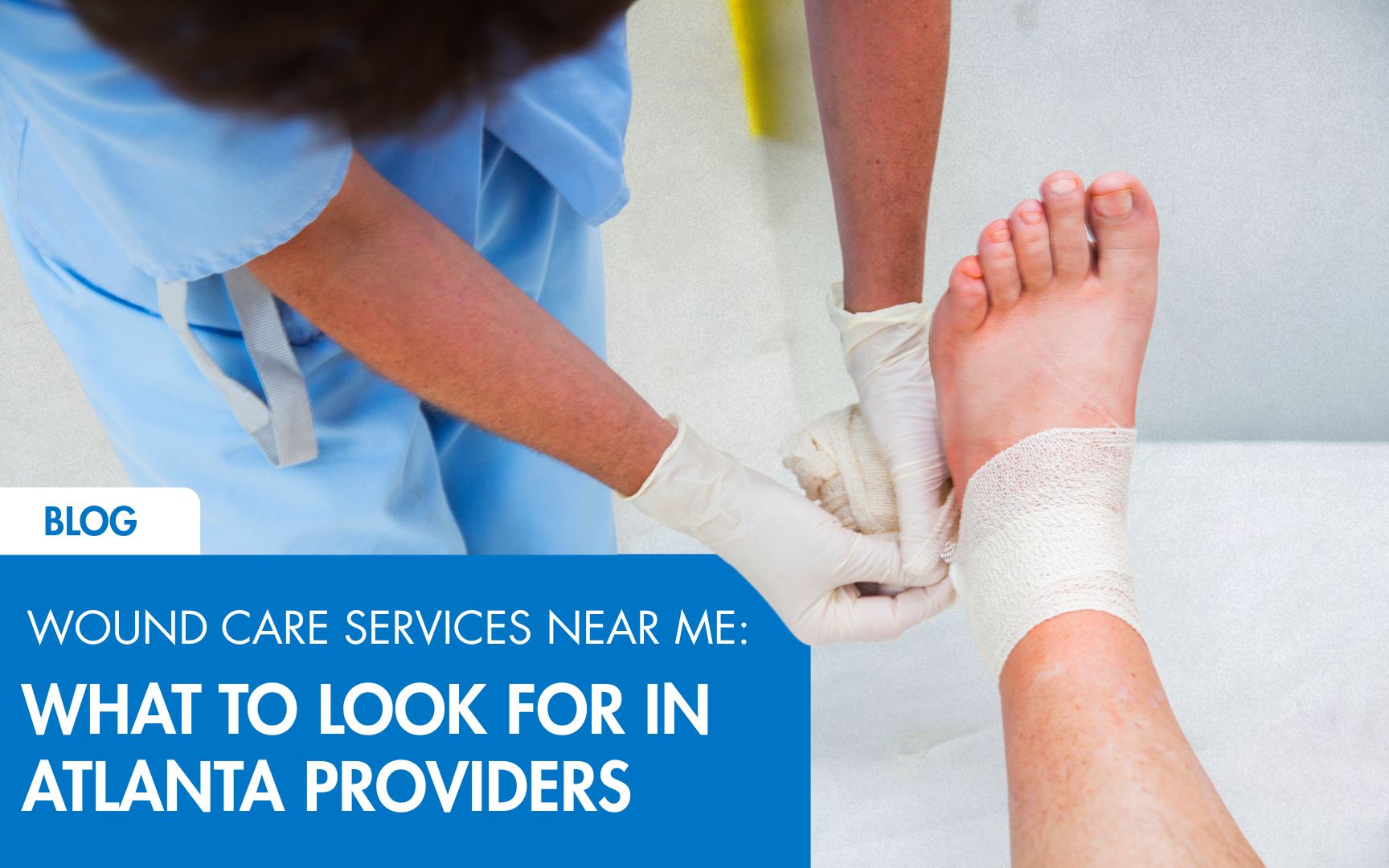
If you have a wound, your body’s immune system should step in immediately, sending white blood cells to clear debris and fight infection so your wound can heal. But if you have diabetes, poor circulation can slow this process, leaving you in pain longer and increasing your risk of serious complications.
That’s why professional wound care is so important. Rather than picking the first “wound care near me” result you find, it’s worth seeking experienced, specialized care you can trust. At Atlanta Medical Clinic, we provide advanced wound care for patients with diabetes, helping wounds heal faster while reducing your risk of long-term damage.
Why Professional Wound Care in Atlanta Matters for Healing
A minor cut that heals quickly usually isn’t anything to worry about. In people with diabetes, however, even small wounds can cause significant complications. Professional treatment prevents infection and speeds healing, ensuring you can continue doing the things you love.
Wound care in Atlanta is about more than applying dressings or using medications to promote healing. Professionals have access to advanced treatments you can’t get elsewhere. When you visit a wound care clinic, you also get personalized treatment from a team of specialists. Your treatment team may include a wound care specialist, an endocrinologist, a nutritionist or a physical therapist, for example.
These specialists understand how diabetes affects the healing process, so they can create a treatment plan tailored to your specific needs. For example, if you have trouble managing your blood sugar (glucose), an endocrinologist might prescribe additional medications. A nutritionist can help you create a plan meal designed to promote healing and address nutrient deficiencies. Physical therapists provide a variety of services, including bandaging, casting, electrical stimulation and debridement (the removal of dead or infected tissue).
What to Look for in a Wound Care Provider in Atlanta
If you need a wound care provider, look for a specialized clinic rather than a general medical facility. Wound care clinics have everything you need in one place, making them the most convenient option for professional treatment. It’s also important to choose a provider that offers comprehensive treatment plans rather than focusing solely on dressings and skin protectants.
Treating the underlying wound is important, but it’s only one aspect of wound care. You need experienced professionals to guide you through the healing process and educate you on how diet and physical activity can affect your wound. A specialty clinic also has advanced technology available to help wounds heal quickly, which can prevent serious complications.
Types of Wounds We Treat
Atlanta Medical Center treats several types of wounds, giving you access to comprehensive care in a convenient location. These are just a few of the diabetic wounds we treat:
- Foot ulcers. Diabetes can damage the nerves and restrict blood flow, making it difficult to feel the bottoms of your feet. As a result, many people with diabetes develop foot ulcers, which are open wounds that cause pain and increase the risk of infection. At Atlanta Medical Clinic, we treat these ulcers and recommend lifestyle changes to help prevent new ones from forming.
- Post-surgical wounds. Several aspects of diabetes contribute to slow healing after surgical procedures. For example, poor glucose control causes the blood vessels to stiffen, making it more difficult for white blood cells and nutrients to reach wounds. Nerve damage caused by diabetes can also prevent you from feeling pain caused by minor wound infections. If you can’t feel pain, you don’t know that something is wrong, which allows the infection to get worse.
- Pressure sores. Pressure sores, also known as pressure ulcers, form when part of your body is subjected to constant pressure. For example, if you have to lie in bed for several days after surgery, you may develop a pressure sore where your back comes into contact with the hospital bed.
- Chronic wounds. Diabetes can cause all types of wounds, from scrapes to lacerations, to heal slowly. Atlanta Medical Clinic treats these wounds, reducing the risk of complications and helping you get back to your regular life much faster.
Mobile Wound Care in Atlanta: When In-Home Care Is an Option
In some cases, in-home wound care is an option, making it easier to get the services you need. Mobile wound care brings high-tech equipment and compassionate experts to you, eliminating the need to travel to a clinic. This option is helpful for people with limited mobility due to previous surgery or chronic health conditions. Although mobile wound care in Atlanta is convenient, it’s not available for every case. In-office care is better if you need advanced treatments.
Your Next Steps for Advanced Wound Care in Atlanta
If you have diabetes and need help avoiding complications caused by slow-healing wounds, Atlanta Medical Clinic can help. Contact us today to book a consultation and learn more about what you can expect as a patient.


0 Comments